The Quiet Audit: What a Spa's Changing Area Says Before Your Treatment Starts
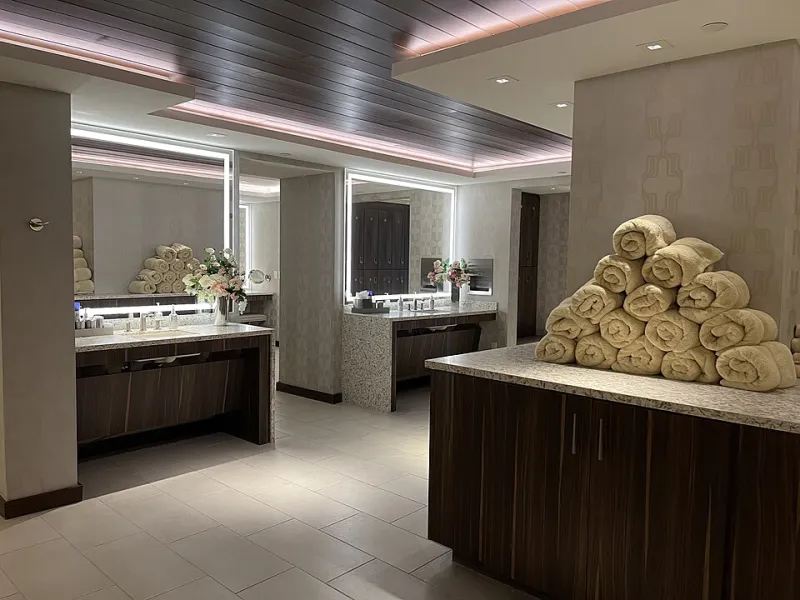
Photo: Missvain, CC BY 4.0, via Wikimedia Commons
You walk in, someone offers tea, the lighting is soft, and the reception desk looks like a magazine spread. All of that is nice. None of it tells you much. The real preview of your visit is usually one door away: the locker room. It is not glamorous, and that is exactly why it is useful. A spa can stage a lobby. A changing area has to be maintained, stocked, cleaned, and thought through by actual people on an actual Tuesday.
Treat the changing room as a quiet audit. You are not looking for marble or a scented candle in every corner. You are looking for evidence that the place runs well when nobody is performing hospitality for you.
Start With the Floor and the Air
Look down. Is the floor dry, or is there a slick film near the showers? Are there mats where they should be, and are those mats clean rather than merely present? Hair in a changing room is not a scandal—people are changing—but a quick pass with a broom between guests is a habit, and habits show.
Then breathe. A good changing area smells like clean towels, mild product, maybe a little cedar or eucalyptus. It should not smell like trapped moisture, old drains, or a gym bag. Ventilation matters more than perfume. If the room feels steamy and stale before anyone has even taken a shower, the air handling is probably an afterthought.
A busy spa that still manages to keep the floor dry and the air fresh is sending a strong signal: someone is paying attention. An empty spa with grimy corners is sending the opposite one.
Signage That Answers Questions Before You Ask
Good signage is boring in the best way. It tells you where to put your robe, where the showers are, whether you should wear your robe to the treatment area, where to leave slippers, and which lockers are available. It also tells you what not to do—no phones in the quiet room, no oils in the sauna, no glass by the pool.
When signage is missing, you end up doing a small, awkward tour in a towel. That is not just inconvenient. It is a clue that the spa has not thought through the guest experience from the guest's side of the door. A thoughtful operation anticipates the questions you will have when you are half-dressed and slightly vulnerable.
Privacy Is Built, Not Promised
Privacy is one of the most revealing details because it costs money and space. Look for changing stalls with curtains or doors that actually latch. Notice whether lockers face away from the main walkway. Check whether there is a bench inside the stall or just a hook on the back of a door. These choices tell you whether the spa treats changing as a private moment or as a logistical problem to be rushed.
In the US, expectations vary widely. Some spas have communal changing areas and a relaxed, bathhouse-style culture. Others are more modest. Neither is wrong, but a good spa makes its norms clear and gives you options. If you cannot find a place to change without feeling exposed, that is worth noting—especially if the rest of the spa is selling calm.
The Robe and Slipper Test
A robe should feel like it was meant for a human body. It should be thick enough to be warm, long enough to cover you comfortably, and clean without smelling like a hotel laundry basket. Check the belt. Check the seams. If the robe is frayed, damp, or so thin that you can read a magazine through it, ask for another one. The way the staff handles that request is its own small test.
Slippers are a similar story. Disposable slippers are fine. Reusable ones are fine if they are actually clean. What matters is whether there are enough sizes and whether anyone has thought about the walk from the locker room to the shower. Small comforts like a plastic bag for a wet swimsuit or a hook that holds a towel off the floor count for more than a fancy label on the door.
Water Pressure, Temperature, and the Small Stuff
Take a shower. Not because you have to, but because it is one of the most honest tests in the building. Is the pressure weak? Does the hot water take forever or go cold mid-rinse? Is there shampoo, conditioner, and body wash, or just one mystery pump? Are there tissues, cotton swabs, lotion, hair dryers, and a mirror with decent light?
None of these things need to be luxurious. They need to be replenished. A spa that refills the cotton swabs and checks the hair dryer is a spa that probably checks the treatment room between guests, too. A spa that leaves empty dispensers and a broken locker key behind is telling you something about its margins—and its priorities.
The Locker Itself
Look at the lockers, not just the decor around them. Do the locks work? Is there a key or a wristband, and is it easy to use? Are there enough hangers? Is there a bench where you can actually sit down, or are you balancing on one foot while trying to wrestle a sock back on? Are there outlets and a safe place for a phone?
Cramped, broken, or confusing lockers create a low-grade stress that follows you into the treatment. You do not want to spend the first ten minutes of a massage thinking about whether your locker actually locked. A well-run changing area removes that mental noise before it starts.
How to Use the Clues
This is not about becoming a spa inspector with a clipboard. It is about collecting a few honest data points. Would you change here again? Would you feel comfortable sending a friend here alone? If the changing area is clean, clear, and stocked, the odds are good that the treatment rooms are too. If it is chaotic, that does not guarantee a bad massage—but it does suggest the spa is managing by improvisation rather than systems.
You can always ask for help. Request a different robe. Ask where the showers are. A good spa will answer without making you feel like a nuisance. A great one will have already answered the question before you asked it.
The treatment is the main event. But the changing area is the opening act, and it rarely fakes its performance. Pay attention on your way in. It will tell you a lot about what happens next—and whether the place deserves a repeat visit.