Two Tables, One Room: A Realistic Take on the Couples Massage
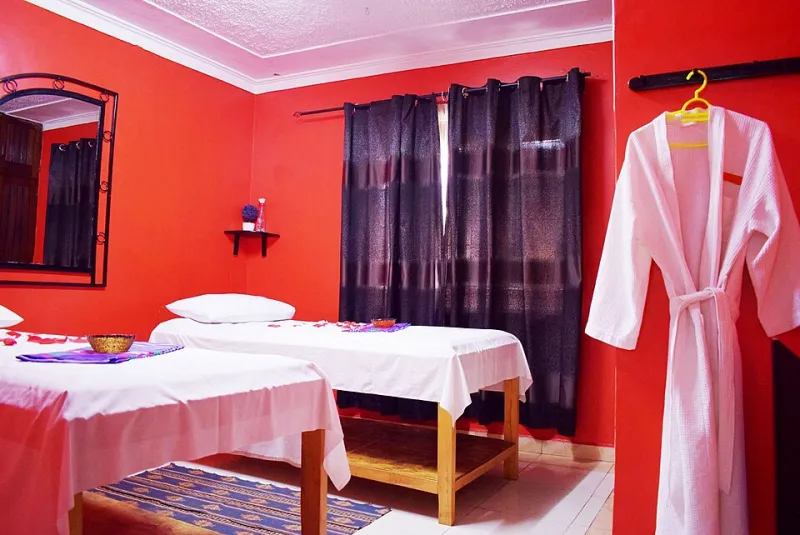
Photo: Alvinategyeka, CC BY-SA 4.0, via Wikimedia Commons
The couples massage has a reputation problem. Not because it's bad — it can be lovely — but because it's sold as the default romantic gesture, the anniversary checkbox, the thing you book when you want to seem thoughtful. What gets lost in that pitch is a simple truth: relaxation is personal. Putting two people in one room doesn't automatically make the experience twice as good. Sometimes it makes it half as good for one of you.
This isn't an argument against ever sharing a treatment room. It's a reality check for anyone who has ever left a couples massage feeling vaguely guilty that they didn't enjoy it more.
The Romance Tax of a Shared Room
When you book a couples massage, you're not just buying two massages. You're buying coordination. You're agreeing on a time, a duration, a pressure level, a conversation style, and a shared arrival window. You're also agreeing to be in the same room while a stranger works on your body — which is fine, unless one of you needs silence and the other needs to narrate every knot.
That coordination has a cost. It's small, but it's real. The person who wanted deep tissue might spend the first ten minutes wondering if their partner is uncomfortable. The person who wanted quiet might feel rude for not chatting. The couple who arrived five minutes late together might both spend the first half of the massage trying to downshift.
None of this means you shouldn't book it. It means you should book it on purpose, not by default.
When Side-by-Side Actually Works
A shared room tends to work best when the two people want roughly the same thing. Not identical — roughly. Same length of treatment, similar pressure preferences, similar tolerance for conversation. It also helps if you actually find each other's presence calming rather than performative.
It's a particularly good fit for a first-timer who's nervous and wants a familiar face nearby, or for a celebration where the shared experience is the point. If you're the kind of couple who can sit in comfortable silence for an hour, you'll probably be fine.
It's a less good fit when one person is booking it to be polite. That's the tell. If you're doing it because you feel like you should, you're probably not going to relax.
The Pressure Problem
This is the most common mismatch, and it's rarely discussed at booking. One person wants firm, focused work on a stubborn shoulder. The other wants light, sweeping Swedish strokes and maybe a nap. In separate rooms, that's easy. In the same room, it's still doable — two therapists can work at different pressures — but the room can feel uneven, and some people find it hard to sink in when they can hear their partner chatting or shifting.
Before you book, have a two-minute conversation about what you each actually want. Not what sounds nice. What you want. If the answers are wildly different, that's useful information, not a relationship crisis.
The Small Talk Trap
Some people decompress by talking. Others need silence the way they need water. A couples massage forces those two styles into one room, and unless you set a norm ahead of time, the talker will fill the silence and the quiet person will endure it.
Agree on a signal before you go in. A raised hand, a closed eye, a simple phrase at check-in: 'We'd like minimal talking today.' This is a completely normal request. Therapists hear it all the time. You are not being rude by asking for quiet; you're being clear.
If you do want to chat, that's fine too. Just make sure you're both opting in, not one person tolerating it.
Six Questions to Ask Before You Book
A good spa won't be thrown by these. If they are, that's a data point.
- Will we be in the same room, or adjoining rooms with a shared door?
- Can we each choose a different pressure level without it becoming a whole thing?
- Can you note 'minimal conversation' on the booking?
- What's the temperature situation? (One of you runs cold. It's always one of you.)
- Are gratuity and any facility fees included in the quoted price?
- If we'd rather have separate rooms, can we still book the same time slot and meet in the lounge after?
That last one is the escape hatch, and it's worth knowing about before you're standing at the front desk.
When Two Separate Appointments Are Kinder
There's no prize for sharing a room. If one of you is anxious, if one of you wants to process something quietly, if your pressure preferences are miles apart, or if one person is clearly doing this as a favor — split up. Book the same time, take two rooms, and meet in the quiet lounge afterward. You'll both get what you came for, and neither of you will spend the session managing the other person's experience.
This is not a verdict on your relationship. It's a logistical choice. Some of the best couples massages I've heard about were actually two solo massages that ended at the same time.
A Script for the Front Desk
If you're not sure how to phrase it, try this: 'Hi, we're booked for a couples massage. We'd like a quiet room with minimal conversation, and we're comfortable with different pressure levels. Can you note that for the therapists?' Then, if you want to hedge: 'And if separate rooms are easier, we're open to that too.'
You'll be surprised how often the second option turns out to be the better one — and how rarely anyone says so out loud.
The measure of a good spa day isn't how synchronized you looked in the robe photo. It's whether you both left feeling restored. Sometimes that means sharing a room. Sometimes it means meeting in the lobby with two very different afterglows.